.webp)




Introduction
When Hello Neighbor was first revealed, it immediately attracted attention for a unique feature rarely seen in horror games: an enemy powered by adaptive artificial intelligence. Unlike traditional horror antagonists who followed predetermined patrol routes or scripted events, the Neighbor was advertised as an AI capable of learning from player behavior. If a player repeatedly entered through a window, the Neighbor might place traps there. If a player preferred a certain route, the Neighbor would supposedly adapt and defend it. The concept promised a dynamic cat-and-mouse experience where every player would encounter a different challenge.
The idea was revolutionary. Horror games often rely on scripted scares and predictable enemy patterns. Hello Neighbor appeared ready to challenge that formula by creating an opponent that evolved alongside the player. Early alpha versions generated excitement because players believed they were witnessing the future of AI-driven horror gameplay.
However, as development progressed and the final game launched, a major controversy emerged. Many players felt that the adaptive AI never fully delivered on its promise. Some believed the system was oversold, while others argued that changing design priorities gradually transformed the game into something very different from what early supporters expected. Years later, discussions about Hello Neighbor often return to the same question: what happened to the adaptive Neighbor?
This article explores the rise and fall of Hello Neighbor’s most ambitious feature and examines how an innovative concept became one of the game's most debated issues.
The Original Vision: A Horror Game Built Around Learning AI
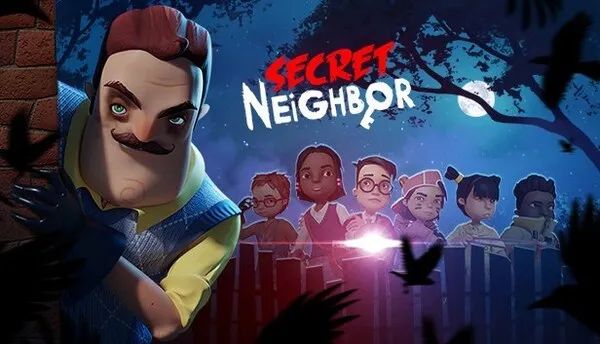
From the beginning, TinyBuild and Dynamic Pixels emphasized the Neighbor’s intelligence as the centerpiece of the experience. Promotional materials frequently highlighted an enemy capable of studying player actions and responding accordingly.
This concept distinguished Hello Neighbor from countless indie horror games entering the market. Instead of running from a monster with scripted behavior, players would face an opponent capable of adapting. The house itself was not meant to be the primary challenge; the Neighbor’s evolving intelligence was.
Why the Idea Generated So Much Excitement
The gaming industry has long pursued believable AI. Many developers promise smarter enemies, but few create systems that genuinely alter gameplay.
Early Expectations
- Dynamic enemy behavior
- Personalized encounters
- Unpredictable gameplay
- Replayability through adaptation
- Real-time learning systems
Players imagined a horror game where no guide could provide a perfect solution because the AI would react differently every time.
Alpha 1: The Neighbor Felt Unpredictable
The first alpha version delivered a surprisingly tense experience despite its simplicity. The Neighbor’s house was relatively small, but his behavior often felt unpredictable.
Players entered the property with limited knowledge, never fully certain where the Neighbor might appear. Because information was scarce, every encounter felt dangerous.
Fear Through Uncertainty
One reason Alpha 1 worked so effectively was that players did not yet understand the system's limitations.
The AI appeared intelligent because players lacked enough experience to identify patterns. As a result, many encounters felt organic and unscripted.
This created genuine suspense that later versions struggled to replicate.
The Community Began Building a Myth Around the AI
As YouTubers and streamers covered the game, stories about the Neighbor’s intelligence spread rapidly.
Players shared examples of the AI seemingly learning from their actions. A trap appearing near a favorite route or a sudden interception often became evidence of advanced machine learning.
Perception Versus Reality
Many of these stories were difficult to verify.
In reality, players frequently interpreted ordinary game mechanics as evidence of sophisticated adaptation. Human beings naturally seek patterns, especially in uncertain situations.
Common Community Claims
- The Neighbor remembered routes
- The Neighbor tracked habits
- The Neighbor predicted movement
- The Neighbor anticipated objectives
- The Neighbor evolved strategically
Whether these beliefs were entirely accurate became increasingly difficult to determine.
Alpha 2 Changed the Direction of Development
Alpha 2 marked a major turning point.
The Neighbor’s house became significantly larger and more complex. Additional puzzles, rooms, and environmental challenges were introduced. Exploration received greater emphasis than before.
While these additions expanded the game’s scope, they also shifted attention away from the AI itself.
The Beginning of a Design Conflict
As the house grew, developers faced a challenge.
A highly adaptive AI can interfere with puzzle progression. If the Neighbor became too effective, many players would never solve the increasingly complex objectives.
This created tension between two competing goals:
Conflicting Priorities
- Intelligent enemy behavior
- Accessible puzzle-solving
- Narrative progression
- Exploration freedom
- Consistent player advancement
Balancing all five proved difficult.
The House Became More Important Than the Neighbor
By later alpha builds, the house itself had become the star of the experience.
Rooms expanded vertically. Strange architecture appeared. Impossible spaces and elaborate puzzle sequences dominated gameplay.
The Neighbor remained important, but his role gradually shifted from adaptive hunter to obstacle.
An Unintended Consequence
As puzzle complexity increased, players spent more time solving environmental challenges and less time interacting directly with the AI.
This reduced opportunities for adaptive behavior to shine.
Instead of feeling like a battle of intelligence between player and Neighbor, gameplay increasingly resembled a puzzle adventure occasionally interrupted by chases.
The Problem of Predictability
One of the biggest criticisms directed at later versions involved predictability.
Although the Neighbor retained some adaptive elements, experienced players began identifying consistent patterns.
The illusion of intelligence weakened as understanding grew.
When Players Learn the System
Every AI system has limitations.
Players naturally experiment, observe, and optimize. Over time, many discovered that the Neighbor often relied on scripted behaviors rather than true strategic adaptation.
This realization damaged one of the game's core selling points.
Symptoms of Predictability
- Repeated patrol routes
- Familiar chase behavior
- Consistent trap placement logic
- Exploitable pathfinding
- Limited strategic variation
As knowledge spread online, community confidence in the AI began declining.
Marketing Expectations Became a Double-Edged Sword
Few indie games benefited from viral marketing as much as Hello Neighbor.
However, marketing success created an additional problem. The more the adaptive AI was promoted, the higher expectations became.
The Danger of Overpromising
Players expected groundbreaking technology.
Many imagined a system comparable to human reasoning, capable of long-term memory and sophisticated planning.
When the final experience failed to match those expectations, disappointment followed.
Importantly, some criticism focused less on what the AI actually did and more on what players believed it would do.
The gap between expectation and reality became one of the game's greatest challenges.
Launch Version and Community Backlash
Upon release, reactions were mixed.
Some players enjoyed the unusual house design, family drama narrative, and puzzle-solving mechanics. Others felt that the final game abandoned the strengths that made early alphas appealing.
Why Many Fans Preferred Earlier Builds
A significant portion of the community argued that Alpha 1 captured something special.
The smaller environment allowed the Neighbor to remain the central focus.
The final game offered more content but often diluted the tension that originally attracted players.
Frequent Community Complaints
- Reduced emphasis on AI
- Excessive puzzle complexity
- Less organic encounters
- Overly scripted sequences
- Weaker horror atmosphere
These criticisms continue appearing in discussions years after release.
The Psychological Impact of Lost Potential
Perhaps the most fascinating aspect of the controversy is that many players criticize Hello Neighbor not for what it is, but for what it could have been.
The game introduced a concept that captured imaginations worldwide.
The "What If" Effect
Players often compare the final game to an idealized version that never actually existed.
This phenomenon creates unusually persistent disappointment because expectations become tied to possibility rather than reality.
The adaptive Neighbor represented a vision of future horror gaming. When that vision appeared unattainable, criticism intensified.
As a result, discussions frequently focus on lost potential rather than actual gameplay quality.
Hello Neighbor’s Lasting Influence on Horror Game Design
Despite controversy, Hello Neighbor left a meaningful mark on the industry.
The game demonstrated that players crave intelligent opponents capable of creating emergent stories.
Developers across multiple genres took notice of the excitement generated by adaptive enemy concepts.
Lessons Learned
The project revealed both the opportunities and challenges of AI-driven horror design.
Key Industry Takeaways
- AI can become a major marketing feature
- Expectations must remain realistic
- Complexity can overshadow core mechanics
- Emergent gameplay attracts audiences
- Perceived intelligence matters as much as actual intelligence
Future developers studying Hello Neighbor can learn valuable lessons about balancing innovation, marketing, and player expectations.
Conclusion
Hello Neighbor’s adaptive AI remains one of the most intriguing examples of unrealized potential in modern gaming. The original vision promised a constantly evolving adversary capable of learning from player behavior and creating unique horror experiences. Early alpha builds convinced many players that such a future was possible, generating enormous excitement around the project.
However, as development continued, priorities shifted. Larger environments, more elaborate puzzles, narrative elements, and accessibility concerns gradually reduced the prominence of the adaptive AI. Although learning systems remained present in some form, they no longer served as the defining feature many players expected. The result was a game that succeeded commercially yet remained controversial among its most dedicated followers.
Ultimately, the story of Hello Neighbor is not simply about artificial intelligence. It is about expectations. The Neighbor became famous because players believed they were witnessing the future of horror game design. Whether the game fulfilled that promise remains debated, but its influence on discussions surrounding AI, emergent gameplay, and player-driven storytelling continues today. Years after release, the adaptive Neighbor remains both Hello Neighbor’s greatest achievement and its most persistent source of controversy.